

The official Consumer Price Index (CPI) report for August dropped this morning, and while the headline inflation number is drawing national attention, the real story for our industry is a painful one. The data reveals a significant and widespread surge in the costs of buying and owning a vehicle, driven by a shocking jump in used car prices and another relentless hike in motor vehicle insurance and repair costs.
After a brief period of hope earlier in the summer, this report confirms that the affordability crisis for American car owners and buyers is not only ongoing but is intensifying. This isn’t just one data point; it’s a perfect storm of rising costs hitting the consumer from every possible angle. Let’s break down the official numbers.

Based in Daytona Beach, Florida, Josh Logan provides data-driven analysis from the unique perspective of a seasoned automotive professional. His goal is to empower consumers with insider knowledge to navigate the complexities of the modern car market.
The Automotive CPI Deep Dive
(August 2025 Data)
This is the data that reveals the true cost pressures on the consumer, separate from the broader economic headlines.
| Category | Aug 2025 | vs. July 2025 | vs. Aug 2024 | vs. Dec 2024) |
|---|---|---|---|---|
| New Vehicles | 178.111 | ▲ +0.3% 177.620 | ▲ +0.7% 176.950 | ▼ -0.3% 178.620 |
| Used Cars & Trucks | 185.322 | ▲ +1.0% 183.419 | ▲ +6.0% 181.446 | ▲ +2.1% 174.762 |
| Motor Vehicle Insurance | 894.075 | ▼ -0.2% 896.018 | ▲ +4.7% 854.307 | ▲ +3.0% 868.417 |
| Maint. & Repairs | 441.987 | ▲ +2.4% 431.604 | ▲ +8.5% 407.374 | ▲ +5.9% 417.312 |
Source: U.S. Bureau of Labor Statistics (BLS), CPI Report released September 11, 2025.
A Multi-Front Assault on Affordability
Used Car Prices Explode… Again.
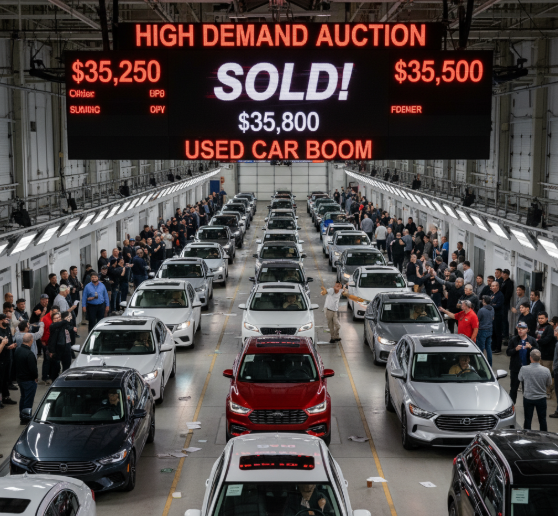
The most significant story in this report is the +1.0% monthly spike in used car prices. This confirms that the reversal we saw in July was not a fluke but the start of a new upward trend. This is a direct result of the tightening inventory we’ve been reporting on; with a critically low 31-day supply of affordable used cars, strong consumer demand is chasing a shrinking pool of vehicles, inevitably pushing prices higher. For budget-conscious buyers, this is a major blow, as the used market—traditionally a haven for affordability—is now a significant source of inflation itself, with prices up 6.0% year-over-year.
Maintenance Costs See a Massive Jump.
The cost of keeping your car on the road took a huge leap in August. The index for Maintenance & Repairs jumped by a massive +2.4% in a single month. Now up 8.5% year-over-year, this is a brutal hit to the wallets of everyday Americans. This reflects the soaring cost of parts that we saw in the PPI report finally and fully translating to the customer’s repair bill, combined with the persistent high cost of labor. As the average age of vehicles on the road remains near historic highs, this non-negotiable expense is becoming a major financial burden.

Insurance Shows No Mercy.
While the monthly decrease of -0.2% may seem like a good sign, it comes on the heels of more than a year of relentless hikes. The year-over-year number of +4.6% shows that the insurance crisis is far from over. Insurance companies are still grappling with the high costs of repairing technologically advanced vehicles, and those costs are being passed directly to consumers with no significant relief in sight.

New Vehicle Prices Begin to Creep Up.
The +0.3% increase in new vehicle prices, though modest, is a critical turning point. It marks the end of the price stability and slight declines we saw earlier in the summer. With inventory tightening and their own production costs remaining high, automakers are now beginning to pass those costs on to the consumer. This increase, however small, signals that the era of potential price relief is over.

The Great Squeeze:
A Two-Front War

This CPI report is the consumer-facing half of our “Great Squeeze” narrative. Just yesterday, we analyzed the Producer Price Index (PPI), which showed that automakers’ costs for parts and steel remain stubbornly high. Now, this CPI report proves that the financial pressure is not being absorbed; it’s being transferred to the public.
This creates a two-front war against inflation: automakers are being squeezed by high production costs, and consumers are being squeezed by high ownership costs. There is no escape valve in the system. The industry can’t afford to offer discounts, and consumers can’t afford the rising prices, a classic recipe for market volatility.
The Ripple Effect:
What This Means for the Market

This perfect storm of rising costs will have significant and predictable consequences for the market in the coming months.
Firstly, it will undoubtedly accelerate the trend toward longer auto loans. As buyers struggle to fit rising prices into their budgets, the 84-month loan will become an even more common, and more dangerous, tool to keep monthly payments manageable.
Secondly, it will put even more pressure on the already depleted supply of older, high-mileage used cars. As buyers are priced out of the late-model used market, they will be forced to compete for the very small number of vehicles under the $15,000 price point, further inflating the prices of the least reliable cars on the market.
Ultimately, the August CPI report is a sobering dose of reality. The path forward for the American car buyer is getting more expensive and more difficult. Affordability is, and will remain, the number one challenge for the foreseeable future.

I appreciate you reading this, and encourage you to engage with me in the comments and on social media. You can get the latest automotive updates as soon as they are published by subscribing above. Thanks for the support, and until next time!





 TheLoganZone
Leave a comment