
This Audio above is a Podcast style, AI Audio Overview of the Article you will be reading, it is not a line by line narration, but rather more content for you to enjoy!
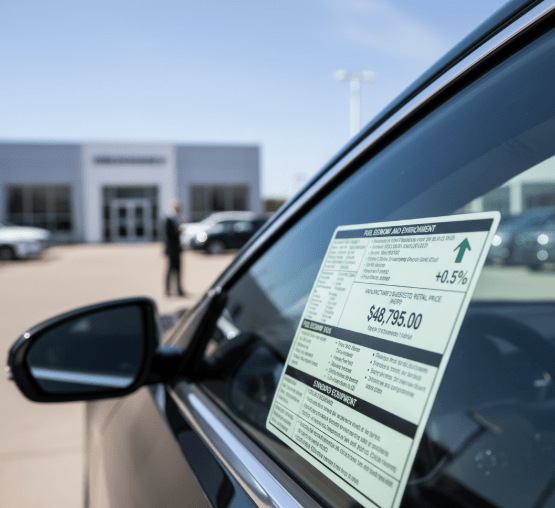
It’s the most important document in a new car transaction, yet it’s the one most people only glance at. It’s a federally mandated label, a silent salesperson, and a treasure map of data all rolled into one. It’s the Monroney sticker, and it’s affixed to the window of every new car sold in the United States.
For the average car buyer, this sticker is just a price tag. But for the informed consumer, it’s the ultimate source of transparency. In an industry filled with jargon and complexity, the Monroney is your legally required guide to exactly what you are buying. Here at TheLoganZone, our mission is to empower you with data, and understanding this document is the first step to taking control of your next vehicle purchase. This is the Rosetta Stone of the car business, and we’re going to teach you how to read it.

Based in Daytona Beach, Florida, Josh Logan provides data-driven analysis from the unique perspective of a seasoned automotive professional. His goal is to empower consumers with insider knowledge to navigate the complexities of the modern car market.
The Basics
MSRP & Vehicle Information
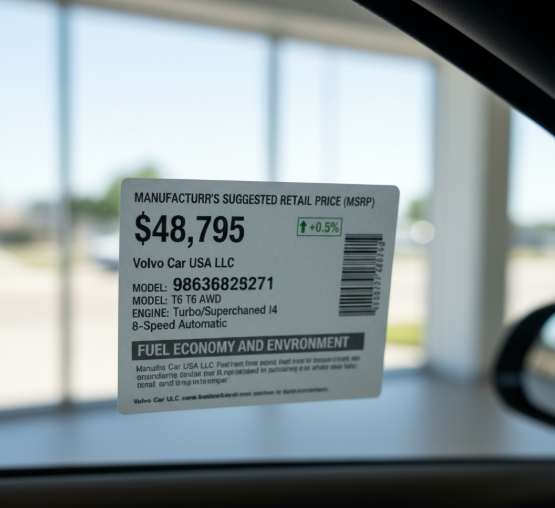
At the very top of the sticker, you’ll find the foundational information. This section identifies the vehicle with surgical precision: the specific make, model, year, and trim level. You’ll also see the Vehicle Identification Number (VIN), a unique 17-digit code that is the car’s fingerprint. Alongside this, the sticker lists the engine and transmission specifications. This is your first checkpoint to ensure the car on the lot is the exact car you researched online.
This section also introduces the most famous number on the sticker: the Manufacturer’s Suggested Retail Price (MSRP). This is the “sticker price,” the baseline figure set by the automaker. It includes all the standard equipment listed, which is the gear that comes on every vehicle of that specific trim level.
It is crucial to understand that MSRP is a starting point, not the final word. The price you ultimately pay is the Actual Transaction Price (ATP), which can be higher or lower depending on market conditions, dealer incentives, and your negotiation. The MSRP is the anchor for that conversation, the number from which all discussions begin.
Optional Equipment & Pricing

Below the standard equipment, you’ll find the à la carte menu: the factory-installed optional equipment. This is where the price can start to climb. This list details every single feature added to the vehicle at the assembly plant, from panoramic sunroofs and premium audio systems to technology packages and special paint colors. Each option is itemized with its specific MSRP.
Pay close attention here. This is where you verify you’re paying for the options you actually want and not for extras you don’t need. It’s also important to differentiate these from dealer-installed accessories. Things like floor mats, wheel locks, or pinstripes added at the dealership are often listed on a separate addendum sticker, not the official Monroney.
Finally, in this section, you’ll see a line item that is almost always non-negotiable: the Destination Charge. This is the cost of shipping the vehicle from the factory to the dealership. It’s a standardized fee for a specific model, meaning the destination charge is the same whether you’re buying the car in Daytona Beach or Des Moines. It’s a real cost of doing business, baked into the final MSRP.
Fuel Economy & Environmental Information
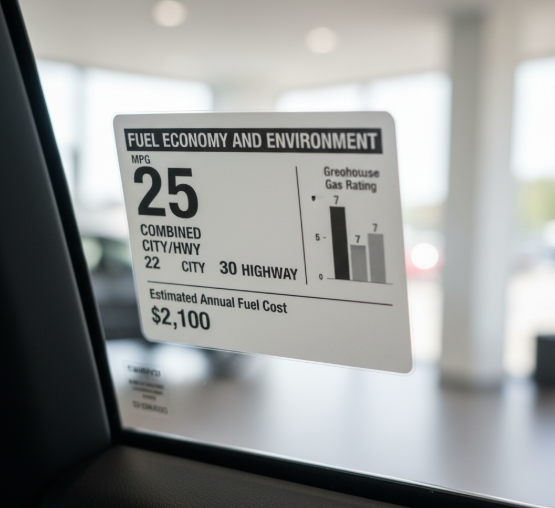
This section of the Monroney sticker is mandated by the Environmental Protection Agency (EPA) and provides a clear, standardized snapshot of the vehicle’s efficiency. The most prominent figures are the Estimated MPG ratings, broken down into City, Highway, and a Combined figure. These numbers are the result of standardized laboratory tests, designed to provide a consistent benchmark for comparing different vehicles.
The sticker also gives you an estimated annual fuel cost, based on a set number of miles driven per year and national average fuel prices. While your personal driving habits will cause this to vary, it’s a powerful tool for comparing the long-term running costs of two different models.
Alongside the fuel data, you’ll find Smog and Greenhouse Gas ratings on a simple 1-to-10 scale (where 10 is the best). This allows you to quickly assess the vehicle’s environmental footprint. For consumers here in Florida and across the country who are conscious of their environmental impact, this data is invaluable.
Parts Content Information

Have you ever wondered where your car is really from? The American Automobile Labeling Act requires the Monroney to disclose the vehicle’s geopolitical DNA. This section, often overlooked, is a fascinating glimpse into the global supply chain.
It breaks down the percentage of U.S. and Canadian parts content in the vehicle. It then lists the major sources of foreign parts content, naming the top two countries and the percentage of parts sourced from them. You might be surprised to see that a car from an American brand has significant parts content from Mexico or Japan, or that a Japanese-brand vehicle has a high percentage of American-made components.
This section also clearly states the Final Assembly Point—the city, state, and country where the vehicle was put together. Furthermore, it specifies the country of origin for the engine and transmission. This data provides a layer of transparency that connects your purchase to the broader narrative of global trade and manufacturing.

Own It Right.
The ‘M’ is for Maintenance. Find your vehicle’s official factory service schedule.
Safety Ratings

For many buyers, nothing is more important than safety. The Monroney sticker presents the results from the National Highway Traffic Safety Administration’s (NHTSA) 5-Star Safety Ratings program. This is the U.S. government’s official crash test data.
The sticker displays ratings on a five-star scale for three key areas:
- Frontal Crash (for driver and passenger)
- Side Crash (for front and rear seats)
- Rollover resistance
An Overall Vehicle Score combines these results into a single, easy-to-understand rating. While this section is a critical data point, it’s worth noting that another key safety organization, the Insurance Institute for Highway Safety (IIHS), provides its own ratings (like the Top Safety Pick awards). The IIHS data isn’t on the sticker, but it’s an excellent resource to consult alongside the government’s ratings.

Knowledge is Power
The Monroney sticker is far more than a price tag. It is a declaration of facts, a legally mandated document that cuts through the noise of marketing and sales pitches. It tells you what a vehicle is, where it came from, what it costs, how efficient it is, and how it protects you.
By taking five minutes to decode this sticker, you transform yourself from a passive customer into an empowered, informed buyer. You gain the ability to verify, question, and compare with confidence. The next time you’re on a dealership lot, don’t just glance at the window sticker. Read it. Understand it. It’s the first and most important step in making a smart automotive decision.

I appreciate you reading this, and encourage you to engage with me in the comments and on social media. You can get the latest automotive updates as soon as they are published by subscribing above. Thanks for the support, and until next time!





 TheLoganZone
Leave a comment