

This Audio above is a Podcast style, AI Audio Overview of the Article you will be reading, it is not a line by line narration, but rather more content for you to enjoy!
You’ve done the research. You’ve configured the perfect car online, right down to the color and the floor mats. The manufacturer’s website shows a clear MSRP, and you’ve secured a pre-approval from your credit union. You walk into the dealership, confident and prepared. But then you see it: a second sticker next to the official Monroney label, loaded with thousands of dollars in “market adjustments” and mandatory add-ons.
The frustration is real, and it creates a confusing contradiction. Recent industry reports, like the latest from Cox Automotive, show that the average new-vehicle transaction price (ATP) has actually dipped slightly below the average Manufacturer’s Suggested Retail Price (MSRP). So how can the data show prices are stabilizing when your real-world experience is a battle against inflated numbers?
The answer is simple: the “average” is a lie. This single data point masks a deeply fractured market. For consumers seeking the most popular, reliable, and in-demand vehicles, the markup crisis is not over. In fact, this practice of inflating the price beyond the sticker is the first and most significant barrier to affordability, and it’s the next chapter in the story we’re tracking at TheLoganZone.

Based in Daytona Beach, Florida, Josh Logan provides data-driven analysis from the unique perspective of a seasoned automotive professional. His goal is to empower consumers with insider knowledge to navigate the complexities of the modern car market.
The Great Divide
Deconstructing the National Averages
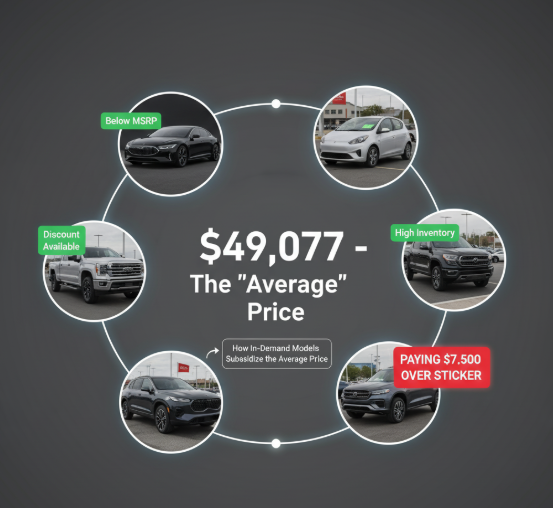
On the surface, the national data seems to suggest a return to normalcy. A cooling market where the consumer is regaining the upper hand. But data, without context, can be deceiving. Let’s look at the numbers that are making the headlines.
| Metric | (August 2025) |
| Average New-Vehicle MSRP | $51,099 |
| Average New-Vehicle Transaction Price (ATP) | $49,077 |
| Average Incentive Spending (% of ATP) | 7.2% |
Source: Cox Automotive / Kelley Blue Book August 2025 Reports.
These figures tell us that, on average, cars are selling for about $2,000 below sticker price, bolstered by incentive spending from manufacturers. But this average is heavily skewed. It’s driven by high-inventory domestic brands and less popular models that dealers are desperate to move. This is where the discounts live.
This aggregate data completely obscures the reality for the vehicles most people want to buy. For the most sought-after trucks and SUVs, demand continues to far outstrip supply. In these hundreds of micro-markets, dealers hold all the cards and wield immense pricing power. The national average doesn’t reflect your reality; it hides it.
The Anatomy of a Markup
How Dealers Inflate the Price
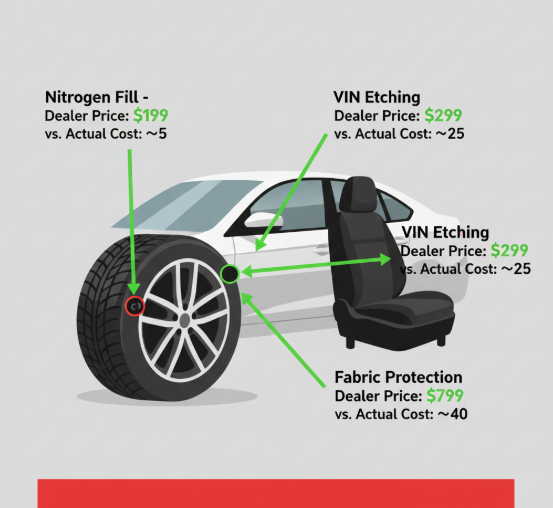
When a dealer has a vehicle they know they can sell for more than the sticker, they employ two primary tactics: the “Market Adjustment” and the “Addendum.” A “Market Adjustment” is the most brazen of the two—it’s a simple, arbitrary line item that adds thousands of dollars to the price for no reason other than pure dealer profit.
More common, however, is the “second sticker,” often called the “Dealer Addendum.” This is a supplemental sticker placed next to the official Monroney, listing mandatory, pre-installed accessories. These are almost always low-value, high-profit items that serve to inflate the final price.
Let’s dissect some of the most common offenders.
| Dealer Add-On | Typical Dealer Charge | Real-World Cost |
| Nitrogen Tire Fill | $199 | ~$10-$30 |
| VIN Etching | $299 | ~$25 (DIY Kit) |
| Fabric/Paint Protection | $799+ | Varies, but professional detailing is often cheaper and higher quality. |
| “Market Adjustment” | $2,000 – $10,000+ | $0 (Pure Dealer Profit) |
Source: Industry analysis based on common dealer practices (reference CarEdge, BLS reports on dealership margins).
A $199 charge for nitrogen-filled tires is indefensible when ambient air is 78% nitrogen and a fill-up at a tire shop costs next to nothing. VIN Etching, a supposed theft deterrent, can be done with a $25 kit. These add-ons are designed to do one thing: add pure, unadulterated profit to the dealer’s bottom line at your expense.
A Tale of Two Markets
The Brands to Target and The Brands to Avoid

The single most important metric for understanding your negotiating power is “Days’ Supply”—the average number of days it takes a dealer to sell a particular model. This data splits the industry neatly into a seller’s market and a buyer’s market.
The Seller’s Market: Here in Florida, we see this every day. Brands with a reputation for reliability and efficiency, like Toyota, Lexus, and Honda, maintain incredibly low inventory. With dozens of buyers lining up for every popular SUV or hybrid that hits the lot, dealers have no incentive to negotiate. This is where you are most likely to encounter significant market adjustments and forced add-on packages. Buying one of these vehicles at MSRP is considered a major win.
The Buyer’s Market: On the other side of the lot, you’ll find brands with a much higher days’ supply. As of this report, brands like Dodge, Ram, Chrysler, and Lincoln have significantly more inventory than buyers. Their dealers are motivated. They are paying interest on every one of those sitting vehicles, and they are far more willing to negotiate on price, often dipping well below MSRP and offering significant incentives to earn your business.
This isn’t about good brands versus bad brands; it’s about the simple economics of supply and demand. Your ability to get a fair price is directly tied to the inventory level of the vehicle you are targeting.

Own It Right.
The ‘M’ is for Maintenance. Find your vehicle’s official factory service schedule.
The First Domino
How Markups Fuel the Affordability Crisis

This is where we connect the dots to the larger affordability crisis. A $5,000 markup and bogus add-on package isn’t just a $5,000 problem. It is $5,000 plus interest, financed over the life of the loan. On a 72-month loan at 7% interest, that $5,000 in fluff adds nearly $1,100 in interest costs and inflates your monthly payment by about $85.
This inflated principal is the first domino to fall. It pushes a manageable payment into uncomfortable territory, forcing buyers to compensate by accepting high-interest loans or, even more dangerously, stretching their loan term to 84 months just to make the monthly number seem palatable. The dealer’s markup is the poison pill that infects the entire financial transaction, a topic we will be dissecting in detail later this week.

Your Defense Against the Second Sticker
The data is clear: while the overall market may be stabilizing, the battle for a fair price on an in-demand vehicle is fiercer than ever. The Manufacturer’s Suggested Retail Price is just that—a suggestion. The real fight is against the dealer’s addendum, the second sticker.
Your defense is knowledge and the willingness to stand your ground. Here are your actionable strategies:
- Always negotiate the “Out-the-Door” price. This single number includes the price of the vehicle, taxes, all fees, and any add-ons. It is the only number that matters.
- Demand an itemized breakdown of all fees. Question every line item. If a fee seems bogus, it probably is.
- Refuse to pay for worthless add-ons. State it clearly and firmly: “I appreciate the offer, but I will not be paying for nitrogen, VIN etching, or protection packages.”
- Be prepared to walk away. The most powerful negotiating tactic you have is your feet. There is always another dealer and another car.
- Target brands and models with higher inventory. Use data on days’ supply to your advantage and shop for vehicles where you have the leverage.
Empower yourself with this data. The sticker on the window is the beginning of the conversation, not the end. By understanding the tactics and the numbers, you can defend your wallet and drive away with a deal that is fair, transparent, and affordable.

I appreciate you reading this, and encourage you to engage with me in the comments and on social media. You can get the latest automotive updates as soon as they are published by subscribing above. Thanks for the support, and until next time!




 TheLoganZone
Leave a comment