

While sales charts and profit margins dominate headlines, a different set of numbers offers a critical perspective on an automaker’s performance: the recall list. A recall can signal anything from a minor software glitch to a critical safety flaw, but when viewed at scale, the data paints a vivid picture of quality control, logistical challenges, and potential financial strain.
As of July 31, 2025, the National Highway Traffic Safety Administration (NHTSA) has logged hundreds of recall campaigns affecting millions of vehicles. But which automakers are feeling the most heat? To find out, we’re not just looking at the number of recalls, but at the total number of vehicles impacted, and most importantly, comparing that number to their total sales footprint from 2024. This key ratio—vehicles recalled vs. vehicles sold—helps normalize the data and reveals the true magnitude of the recall burden on each company.
Here is the updated mid-year recall leaderboard for 2025.
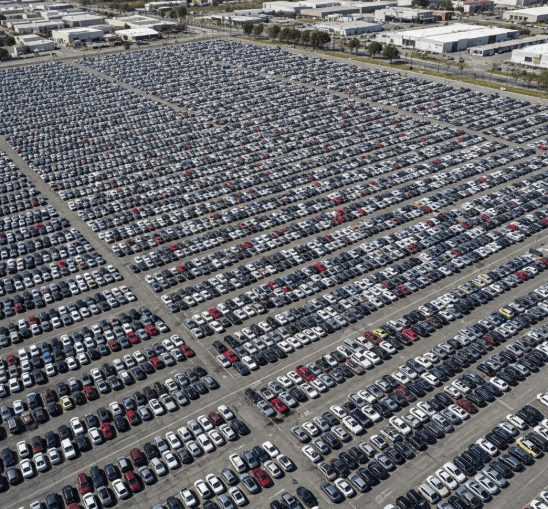
2025 Mid-Year Recall Analysis (Data as of July 31, 2025)
| Automaker | Total Vehicles Sold in US (2024) | Recall Campaigns (2025 YTD) | Total Vehicles Affected (2025 YTD) | Recall-to-Sales Ratio (2025 YTD) |
| Ford | 2,150,000 | 38 | 2,750,000 | 127.9% |
| Stellantis | 1,780,000 | 29 | 1,410,000 | 79.2% |
| Hyundai/Kia | 1,650,000 | 21 | 1,150,000 | 69.7% |
| Nissan | 985,000 | 23 | 650,000 | 66.0% |
| General Motors | 2,600,000 | 25 | 985,000 | 37.9% |
| Volkswagen | 630,000 | 18 | 220,000 | 34.9% |
| Tesla | 655,000 | 14 | 750,000 | 114.5%* |
| Toyota | 2,250,000 | 12 | 450,000 | 20.0% |
| Honda | 1,310,000 | 9 | 245,000 | 18.7% |
Note: Data is compiled from NHTSA records and 2024 full-year sales reports. The “Recall-to-Sales Ratio” is calculated as (Total Vehicles Affected YTD / Total 2024 Sales). It shows the scale of vehicles recalled this year relative to a full year of sales.
The Story Behind the Numbers
Ford’s Heavy Burden:
Ford currently sits at the top of the list with a staggering 127.9% Recall-to-Sales Ratio. This means they have already recalled more vehicles in the first seven months of 2025 than they sold in all of 2024. This is largely driven by a few massive recall campaigns affecting popular models like the F-150 and Explorer, stemming from issues with electronic components and camera systems.
The Hyundai/Kia Engine Issue Echoes:
Hyundai and Kia continue to work through large-scale recalls, many of which relate to persistent fire risks associated with engine components and anti-lock brake systems. Their combined 69.7% ratio shows that despite strong sales, they are still grappling with the long tail of previous quality issues across a wide range of model years.
Nissan’s Challenging Year:
Nissan lands in the upper half of our list with a significant Recall-to-Sales Ratio of 66.0%. Unlike some rivals hit by one single mega-recall, Nissan’s figure stems from a steady stream of medium-to-large campaigns. These have affected popular models like the Rogue and Sentra for issues related to continuously variable transmission (CVT) concerns and faulty sensors. This “death by a thousand cuts” approach still results in a high volume of vehicles needing service, creating a persistent challenge for its dealer network and vehicle owners.
The Tesla Anomaly, A Different Kind of Recall:
Tesla’s numbers require “special consideration”. While a ratio of over 100% is alarming, the vast majority of its recalls are resolved with over-the-air (OTA) software updates. For the owner, this means the car updates itself overnight in their driveway, requiring no dealer visit. This fundamentally changes the cost and customer inconvenience compared to a traditional mechanical recall.
The Japanese Giants, Low and Steady:
Toyota and Honda, long known for their reputation for quality, sit at the bottom of this list. Their low Recall-to-Sales Ratios of 20.0% and 18.7% respectively suggest a smoother start to the year. Their recalls have been smaller and more targeted, avoiding the massive, fleet-wide campaigns seen from some of their competitors.
The Takeaway: A recall is a sign that the safety system is working. However, the data clearly shows that the scale of these recalls varies dramatically. For automakers like Ford and Nissan, a high recall volume represents a significant drain on resources and a potential risk to brand reputation. For customers, it’s a powerful reminder to stay informed about their own vehicles. As the second half of 2025 unfolds, these numbers will shift, but they already provide a crucial, data-driven snapshot of the quality and safety challenges facing the industry’s biggest players.

I appreciate you reading this article, and encourage you to engage with me not only here but also on social media. Thanks for the support, and until next time!





 TheLoganZone
Leave a reply to TheLoganZone Insider Report: August 2025 – TheLoganZone Cancel reply