
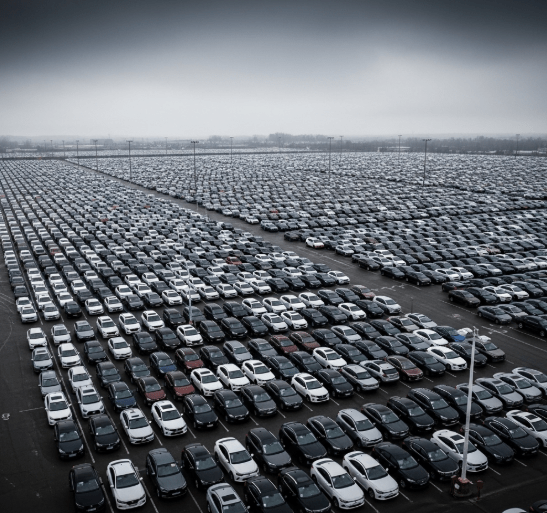

IMMEDIATE ANALYSIS – The auto industry is reporting a strong 16.4 million seasonally adjusted annual rate (SAAR) for July, a headline that, in isolation, suggests a booming market. However, this top-line number is dangerously misleading. It conceals a deepening crisis for automakers: profits are collapsing under the weight of tariffs while unsold inventory is simultaneously swelling on dealer lots.
This isn’t a sales boom; it’s a margin squeeze. Automakers are caught in a vise. They are being forced to produce and sell more vehicles to maintain market share, but they aren’t making money on them. The culprit isn’t discounts—it’s the devastating impact of tariffs on every unit sold.
The Data That Tells the Real Story
To understand the true health of the market, we must connect three critical data sets: sales volume, inventory levels, and profitability.
- The Sales Figure: 1.45 million units sold in July (a 16.4M SAAR). On its own, this looks positive.
- The Inventory Glut (The Cox Automotive Data): As of the start of July, new-vehicle inventory swelled to 2.83 million units, pushing the days’ supply to a sluggish 82 days. A healthy market is typically 50-60 days. This proves production is outpacing true, organic demand.
- The Profit Collapse (Our Q2 Analysis): As we’ve already reported, major automakers saw profits plunge by 35-40% in the second quarter, attributing the losses directly to billions of dollars in tariff costs, not discounts.
The most telling piece of evidence? The Cox Automotive report shows that sales incentives in June were nearly flat, rising only 0.1% to 6.9% of the average transaction price. Automakers are not slashing prices to drive sales; their profits are simply evaporating due to external fees.

The Vise Grip: Tariffs on One Side, A Glut on the Other
This is the central crisis facing the industry. Management is trapped between two terrible options:
- Option A: Cut Production. This would solve the inventory problem but would mean sacrificing market share to competitors and could lead to plant shutdowns—a politically and financially painful move.
- Option B: Keep Building Cars. This maintains market share and keeps factories running, but it forces them to push more vehicles into a saturated market where each sale is already burdened with crippling tariff costs.
The July sales numbers show they have chosen Option B. They are maintaining volume at all costs, leading to the illusion of a strong market while their financial foundation erodes.

Re-evaluating the Growth Numbers
With this context, the sales growth figures take on a new, more ominous meaning:
- Year-Over-Year (vs. July 2024): The 7.4% increase in sales isn’t a sign of a healthier market; it’s a sign of a more desperate one. Automakers are pushing more cars into the channel, regardless of the low profitability of each sale.
- Year-to-Date: The 7.7% growth in sales for the year is now revealed to be some of the most unprofitable growth the industry has seen in years.
The Real Indicators to Watch Now

Forget the SAAR. To gauge the true health of the auto industry for the rest of 2025, these are the only numbers that matter:
- Days’ Supply: Will this number continue to climb past 82 days? If it approaches 90, it signals a breaking point where production cuts will become unavoidable.
- Automaker Guidance: Listen closely to any announcements about Q4 production schedules. Any mention of “adjusting production to meet demand” is code for significant cuts.
- Profit Margin Per Unit: The Q3 financial reports will be critical. Will the profit per vehicle sold continue to plummet, even as sales volume remains high?
The story of July’s auto sales isn’t one of strength, but of stress. The industry is successfully moving more metal, but it’s being hollowed out from the inside by a margin crisis it has little power to control.
I appreciate you reading this article, and encourage you to engage with me not only here but also on social media. Thanks for the support, and until next time!






 TheLoganZone
Leave a reply to TheLoganZone Insider Report: August 2025 – TheLoganZone Cancel reply