
It’s one of the most anxious and misunderstood moments in any car deal. You’ve handed over the keys to your trade-in. The salesperson takes a quick walk around it, brings it to their manager, and then… you wait. You see the manager through the glass, clicking away at a computer, not even looking at your car anymore.
“What’s taking so long?” you wonder. “Are they playing games with me? I see him RIGHT THERE!”
As a 13-year automotive professional here in Daytona Beach, I’m here to pull back the curtain. The truth is, the manager isn’t playing games; they’re analyzing a flood of real-time data from the same software platforms that 99% of dealers in the country rely on. Welcome to the modern, data-driven vehicle appraisal.
Let’s walk through the four steps that actually happen behind that glass.
Step 1:
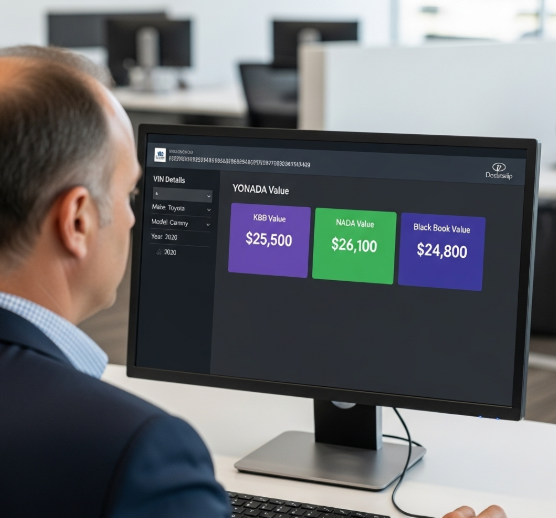
The VIN Decode & The “Three Books”
The moment your keys leave your hand, the physical inspection is secondary. The first step is always digital. We enter your 17-digit VIN into our system, which instantly tells us the vehicle’s entire history—every option, the original MSRP, and any reported accidents via CarFax or AutoCheck.
Simultaneously, the software pulls up the “book values” from three main sources:
- KBB (Kelley Blue Book): The most consumer-facing value.
- NADAguides: The industry standard, often used by banks for lending values.
- Black Book: A tool that provides up-to-date wholesale values.
This gives us a baseline range for “Trade-In,” “Private Party,” and “Retail” values, but honestly, this is just a starting point.
Step 2:
The Walk-Around – Building the Car’s Story
While the manager is starting on the computer, the salesperson is doing a walk-around. We’re not just looking for dents; we’re building the story of your car and assessing risk.
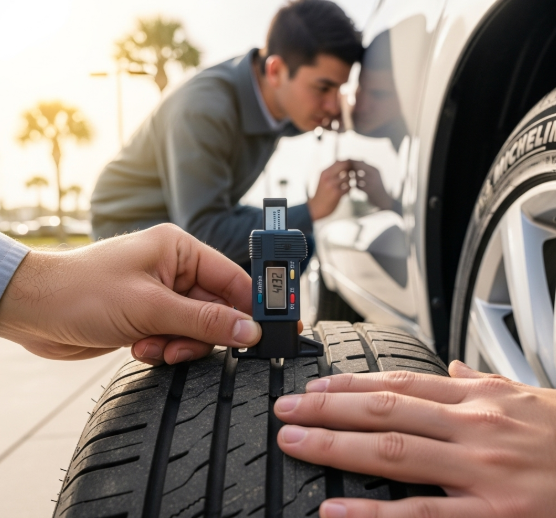
- Tires: Are they a matching set of a reputable brand, or cheap replacements? This is a huge indicator of how the car was maintained.
- Paint & Body: We look for inconsistent paint gloss and misaligned panels—dead giveaways of a previous, unreported accident repair.
- Windshield: Chips and cracks are an immediate reconditioning cost.
- The “Sniff Test”: Lingering smoke or pet odors can cost hundreds in professional remediation and significantly lower a car’s value.
- Service Records: Do you have them? A stack of maintenance receipts is the best evidence you can provide that you cared for your vehicle.
Step 3:
The Market Check (This is What’s Taking So Long)
This is the most critical step, and it’s what the manager is doing on the computer. We are using powerful SaaS tools from Cox Automotive, like vAuto Provision and the Manheim Market Report (MMR).
- vAuto Live Market View: This tool scans a 150-mile radius (or more) of our dealership in Daytona Beach and shows us every single similar vehicle for sale. It tells us what our direct competitors are pricing their cars at right now.
- Manheim Market Report (MMR): This is the “stock market for used cars.” It shows us what dealers have actually paid for the same year, make, and model at wholesale auctions in the last 24-48 hours.
This is the answer to the question. The manager isn’t ignoring you; they are comparing the “book value” against the real-time local retail market and the actual wholesale cost. This step is 100% data, not opinion.

Step 4:
Calculating “Recon” & The Final Offer
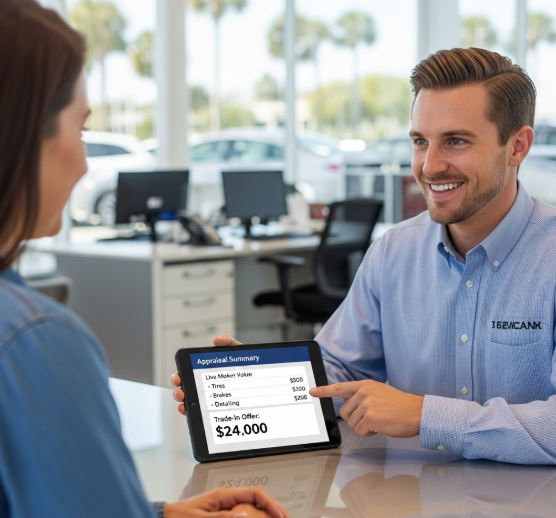
The final step is to combine the data. The manager takes the notes from the walk-around to create a “recon” (reconditioning) budget. It looks something like this: “Okay, this car has a live market value of $20,000. But it needs four new tires ($800), a professional detail for the dog smell ($400), and a new set of brakes ($600). That’s $1,800 in recon.”
The final formula is simple: (Live Market Value) - (Reconditioning Costs) - (Profit Margin/Risk Buffer) = **Your Trade-In Offer**
Conclusion:
How to Be a Pro-Active Seller
Now that you know the process, you have the power. The goal isn’t to “beat” the dealer; it’s to present a vehicle that minimizes their risk and recon costs.
- Clean Your Car: A professionally detailed car signals that it was well-maintained.
- Gather Your Service Records: Hand them to the salesperson. It’s the best “evidence binder” you can have.
- Get a Baseline: Before you go to a traditional dealer, get a real, written offer from CarMax from an In-Person Appraisal. They are the largest buyer of used cars in the country, and their offer is a powerful, data-driven baseline you can hold in your hand.
- Be Honest: Point out the flaws yourself. It builds trust and shows you’re a professional, just like us.
When you do this, you’re not just a customer; you’re a professional seller. And that’s when you get the best value, every time.

I appreciate you reading this, and encourage you to engage with me in the comments and on social media. You can get the latest automotive updates as soon as they are published by subscribing above. Thanks for the support, and until next time!





 TheLoganZone
Leave a reply to TheLoganZone Insider Report: August 2025 – TheLoganZone Cancel reply