
This Audio above is a Podcast style, AI Audio Overview of the Article you will be reading, it is not a line by line narration, but rather more content for you to enjoy!
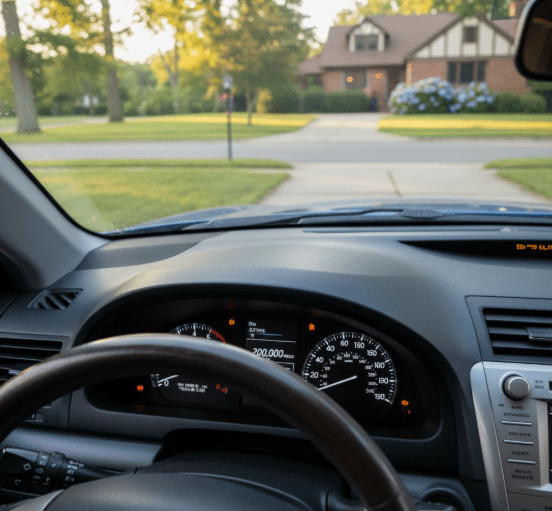
In uncertain times, the smartest financial move is often the one you don’t make. With economic and global pressures mounting, now might not be the right time to take on a new car payment. The real power move is extending the life of the vehicle you already own and trust. A well-maintained car isn’t just reliable transportation; it’s a paid-for asset and a source of financial security.
As a 13-year automotive professional, I’ve seen firsthand what separates a car that’s traded in at 80,000 miles, with a limited service history, from one that’s still running strong at 200,000 with a perfect track record of preventative maintenance. It’s rarely about luck; it’s about a consistent, mindful approach to maintenance. This is my professional guide to the simple, often overlooked steps that will help you weather any storm and keep your car on the road for years to come.

Based in Daytona Beach, Florida, Josh Logan provides data-driven analysis from the unique perspective of a seasoned automotive professional. His goal is to empower consumers with insider knowledge to navigate the complexities of the modern car market.
Beyond the Oil Change
The Fluids That Matter Most

Every owner knows to change their oil, but oil is just one of several vital fluids that keep your car’s complex systems operating smoothly. Neglecting these is the most common mistake I see.
- Transmission Fluid: This is the lifeblood of your car’s gearbox. It lubricates and cools the hundreds of intricate moving parts. Over time, it breaks down and collects debris. While some manufacturers claim “lifetime” fluid, that’s a gamble. For maximum longevity, a transmission fluid drain-and-fill every 60,000 miles is the gold standard of preventative care.
- Coolant (Antifreeze): This prevents your engine from overheating in the summer and freezing in the winter. More importantly, the additives in fresh coolant prevent corrosion from building up inside your engine, radiator, and heater core. A coolant flush every 5 years or 100,000 miles is a small investment that prevents catastrophic engine damage.
- Brake Fluid: This is often the most ignored fluid. Brake fluid is hygroscopic, meaning it absorbs moisture from the air over time. This moisture can cause internal corrosion in your brake lines and calipers, leading to spongy, unsafe brakes. A brake fluid flush every 2-3 years is a critical safety and maintenance item.
The “Listen to Your Car” Method

You are the first and best line of defense against major repairs. Learning to listen to your car and identify small problems before they escalate is an invaluable skill.
- A High-Pitched Squeal When Braking: This is your brake wear indicator. It’s a small metal tab designed to make this exact noise when your brake pads are low. Address it now, and you’ll just need new pads. Ignore it, and you’ll soon be paying for new rotors, too.
- A Deep Rumbling or “Humming” at Highway Speeds: This sound, which often changes when you turn, is the classic sign of a failing wheel bearing. It’s safe to drive on for a short time, but it will only get louder and will eventually fail, requiring a much more expensive repair.
- A “Clunk” or “Knock” Over Bumps: This usually points to a worn suspension component, like a sway bar link or a strut. These are typically inexpensive fixes that dramatically improve your car’s ride quality and prevent excessive tire wear.
The Tire Secret
The Power of Rotation & Alignment
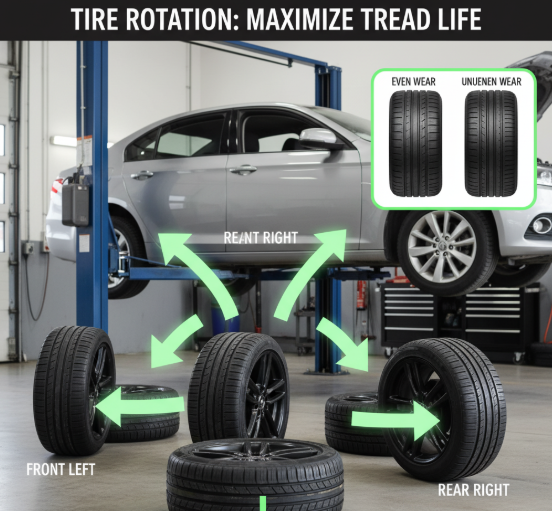
Tires are one of the biggest expenses in car ownership. A set can easily cost over $1,000. Yet, most people neglect the two simple procedures that can nearly double their lifespan.
Tire Rotation (every 5,000-7,000 miles) ensures that your tires wear evenly. On a front-wheel-drive car, the front tires do all the work of accelerating, steering, and most of the braking, causing them to wear down much faster than the rears. Regular rotation spreads that wear across all four tires.
Wheel Alignment (check once a year or if you hit a major pothole) ensures your car tracks straight. A misaligned car will cause the tires to “scrub” against the pavement, rapidly wearing down the edges. A $100 alignment can save you from having to buy a new set of tires a year or two early.
Own It Right.
The ‘M’ is for Maintenance. Find your vehicle’s official factory service schedule.
Fighting the Elements
The Florida Preservation Plan
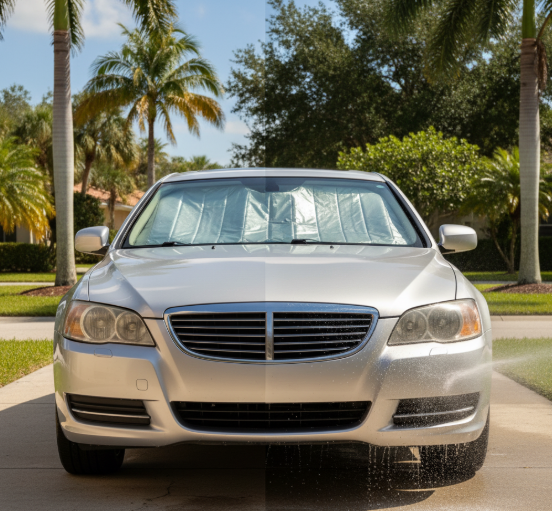
Here in Daytona Beach, the environment is beautiful but brutal on a vehicle. The sun and salt air are relentless.
- Sun Protection: The number one killer of your car’s paint and interior is UV radiation. A simple, foldable sunshade for your windshield is the most effective tool to prevent your dashboard from cracking and fading. Regularly applying a quality wax or sealant (2-3 times a year) creates a sacrificial barrier that protects your paint from the sun’s rays.
- Salt Air Corrosion: If you live near the beach, the salt in the air is constantly attacking your car’s metal components. A quick rinse of the undercarriage and wheel wells at a self-serve car wash once a week is the best way to prevent premature rust and corrosion.

Finding an Honest Mechanic

For work you can’t do yourself, a trustworthy independent mechanic is your greatest asset.
- Seek Certifications: Look for shops with ASE (Automotive Service Excellence) certified technicians.
- Read Reviews: Use Google and Yelp, but focus on reviews that mention honesty, communication, and fair pricing, not just speed.
- Start Small: Try a new shop for a simple job, like an oil change or tire rotation. If they are professional and don’t try to upsell you on a dozen unnecessary services, you’ve likely found a good partner for the long haul.
By investing a little time and attention in these key areas, you’re not just maintaining a machine; you’re preserving an asset and granting yourself the peace of mind that comes from having a safe, reliable vehicle you can count on, no matter what the world throws at you.

I appreciate you reading this, and encourage you to engage with me in the comments and on social media. You can get the latest automotive updates as soon as they are published by subscribing above. Thanks for the support, and until next time!




 TheLoganZone
Leave a reply to TheLoganZone Insider Report: September 2025 – TheLoganZone Cancel reply