

This Audio above is a Podcast style, AI Audio Overview of the Article you will be reading, it is not a line by line narration, but rather more content for you to enjoy!
Over the last 12 months, General Motors CEO Mary Barra has sold more than $145 million of her own company’s stock. Let that number sink in. This is not a single, planned sale to diversify a portfolio. It is a sustained, systematic liquidation of personal capital on a scale that is simply breathtaking. And it is not happening in a vacuum. During that same period, the number of significant, informative stock buys from Barra and her entire executive leadership team has been effectively zero, with a single purchase in January of $607,920. It is a one-way street of cash, flowing directly out of the executive suite and into private accounts.
This is not routine financial planning; this is a sustained, top-down exodus. When the most informed insiders at a bellwether of the American economy—a company whose health is intrinsically linked to that of the nation—are all heading for the door, it is one of the most significant and alarming financial signals of the year. This special investigation will lay out the timeline of this massive sell-off and argue that it represents an unprecedented vote of no-confidence by the company’s most informed leaders, not in the future of General Motors, but in the future of the U.S. economy itself.

Based in Daytona Beach, Florida, Josh Logan provides data-driven analysis from the unique perspective of a seasoned automotive professional. His goal is to empower consumers with insider knowledge to navigate the complexities of the modern car market.
The Anatomy of the Exit
Charting the Sales
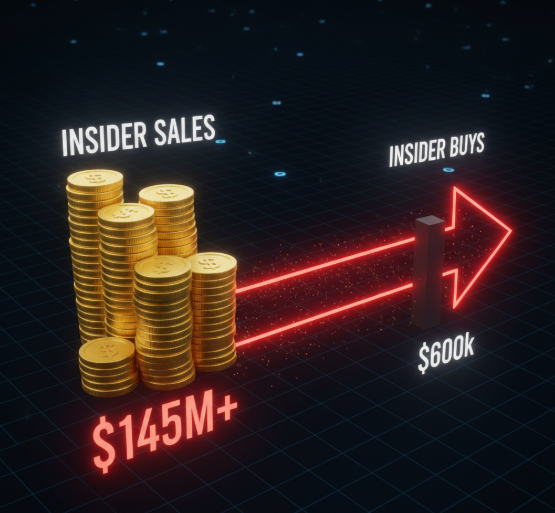
A single insider sale can be explained away. A multi-million dollar sale might raise an eyebrow. A year-long, nine-figure selling spree by a CEO, mirrored by her top lieutenants, is a data-driven indictment that cannot be ignored. The pattern of selling from GM’s chief executive is both consistent and escalating, as public SEC filings clearly show.
Primary Investigation Table: The Barra Sell-Off (Trailing 12 Months)
| Date | Shares Sold | Approx. Value |
|---|---|---|
| Sept 25, 2025 | 777,538 | $46.6 Million |
| Sept 16, 2025 | 29,486 | $1.8 Million |
| Aug 29, 2025 | 994,863 | $57.9 Million |
| Nov 12, 2024 | 206,824 | $11.9 Million |
| Oct 24, 2024 | 506,824 | $27.0 Million |
| TOTAL | 2.52 Million | $145.3 Million |
Source: Public SEC Filings (Form 4)
The timeline itself tells a story. The sales are not just large; they are becoming more frequent and larger in size, with two massive liquidations totaling over $104 million in August and September alone. In total, these sales represent a liquidation of more than half of her previously held stock in the company she leads.
But this investigation broadens far beyond a single CEO. This is a coordinated, C-suite-wide trend. A review of SEC filings reveals a consistent pattern of multi-million dollar sales by other top GM executives, including the company’s President, Vice President and Executive Vice President. While Barra’s sales are the largest, the collective action paints a picture of an executive team moving in lockstep to de-risk their personal holdings. There is no counter-signal, no executive buying to suggest this is business as usual. The flow is exclusively outward.
The Flawed Logic of ‘Shareholder Alignment’

For decades, the textbook theory of executive compensation has been that paying leaders in stock aligns their interests with those of shareholders. The idea is simple: if the company does well, the stock price rises, and everyone from the CEO to the 401(k)-holding factory worker benefits. It is a narrative of a shared journey toward prosperity.
The evidence at hand dismantles this theory. The system has not created alignment; it has created a multi-tiered system of extraction. It has allowed the executive team to profit immensely by cashing out hundreds of millions of dollars in stock at what they may perceive to be the top of the market, an opportunity not afforded to the average GM employee whose wages have struggled to keep pace with inflation.
Furthermore, the financial structure of these sales creates a stark contrast between the executive suite and the assembly line. These stock-based awards, when sold, are often taxed at the lower long-term capital gains rate, a significant tax advantage compared to the income tax paid by the company’s salaried and hourly workforce. When an executive can liquidate tens of millions of dollars and pay a lower tax rate on it than a plant manager pays on their salary, the system is not fostering alignment. It is creating a protected class of insiders who are able to extract maximum value with minimum tax liability, all while the company’s rank-and-file employees bear the brunt of economic headwinds.

Own It Right.
The ‘M’ is for Maintenance. Find your vehicle’s official factory service schedule.
If Not GM, Then What?
The Broader Economic Warning

To be clear, this analysis is not an indictment of General Motors’ operational health. The company has navigated the post-pandemic supply chain chaos with relative strength and is making credible strides in its transition to electrification. This operational stability, however, is precisely what makes the sheer scale of this insider selling so profoundly alarming.
If the company’s own leaders were concerned about a “GM problem”—a pending product failure, a legal crisis, or an internal breakdown—the selling might be understandable as an act of self-preservation. But the evidence points to a different conclusion. This is not a signal of a “GM problem”; this is the signal of an “economy problem”.
A CEO of a global manufacturing giant like General Motors has a real-time dashboard for the health of the world economy. They have access to global supply chain data, up-to-the-minute consumer credit trends from their own auto finance division, and a seat at the table in high-level policy discussions. When a leader with that level of intelligence systematically de-risks over $145 million of her personal finances, she is not making a statement about the next quarter’s car sales. She is making a statement about the stability of the entire system.
The actions of GM’s executive team are the ultimate data point in the “Great Squeeze” narrative we have been tracking. The people with the most information and the most to lose are quietly, consistently, and relentlessly heading for the exits. They are preparing for a storm.

A Message Written in Stock Tickers

Any single stock sale can be explained away with talk of diversification, tax planning, or personal expenses. A year-long, nine-figure selling spree by an entire executive team, set against a backdrop of basically zero corresponding buys, cannot. This pattern of behavior is the ultimate “confession of an insider”. It is a non-verbal, yet incredibly loud, forecast of significant economic turbulence on the horizon.
CEOs and their leadership teams must project confidence in public statements and quarterly earnings calls. It is part of the job. But privately, their SEC filings tell the unvarnished truth. And the truth from inside General Motors is a $145 million warning sign for the entire economy.

I appreciate you reading this, and encourage you to engage with me in the comments and on social media. You can get the latest automotive updates as soon as they are published by subscribing above. Thanks for the support, and until next time!





 TheLoganZone
Leave a reply to TheLoganZone Insider Report: October 2025 – TheLoganZone Cancel reply